When we moved into our sustainable, healthy home, one of the materials that immediately caught my attention was the Accoya wood used for our siding, decking, and even our window and door casings. Sourced from Delta Millworks, Accoya wood was a completely new product to us, but it has quickly become one of our favorite features of the home. Both beautiful and sustainable, Accoya wood is an exceptional choice for outdoor applications, and we’ve been thoroughly impressed by how well it performs in the desert climate.
What Makes Accoya Wood Special?
Accoya starts with Radiata Pine, a sustainably sourced softwood that undergoes a unique process called acetylation. In simple terms, acetylation is like a “pickling” process that changes the structure of the wood at a molecular level. The process makes the wood much less prone to absorbing and releasing water, which is what typically causes wood to warp, swell, or shrink when exposed to the elements. This treatment not only stabilizes the wood but also extends its lifespan significantly, making it more durable and resilient than untreated wood.
What’s remarkable about Accoya is that it combines the beauty of natural wood with the performance of synthetic materials, without any of the environmental downsides. The acetylation process doesn’t involve any harmful chemicals, and the wood retains its natural beauty while gaining exceptional durability. It’s also resistant to decay and insect damage, making it perfect for outdoor applications like decking, window and door casings, and siding.
How Accoya Wood is Used in Our Home
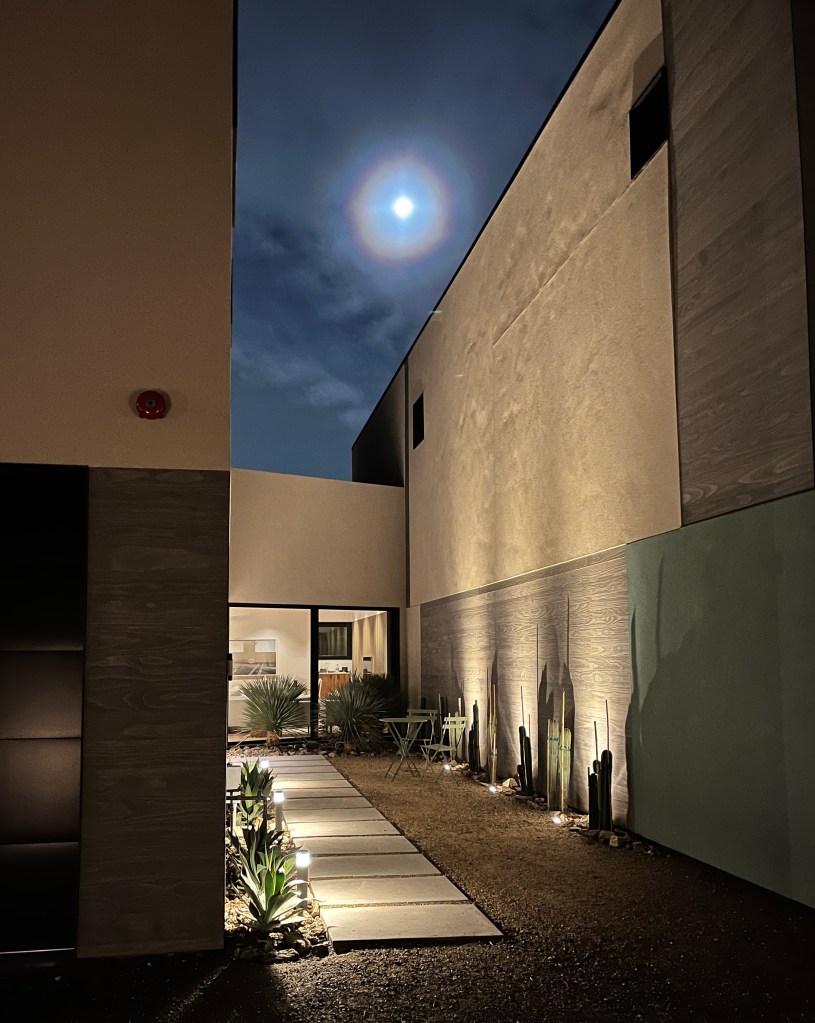
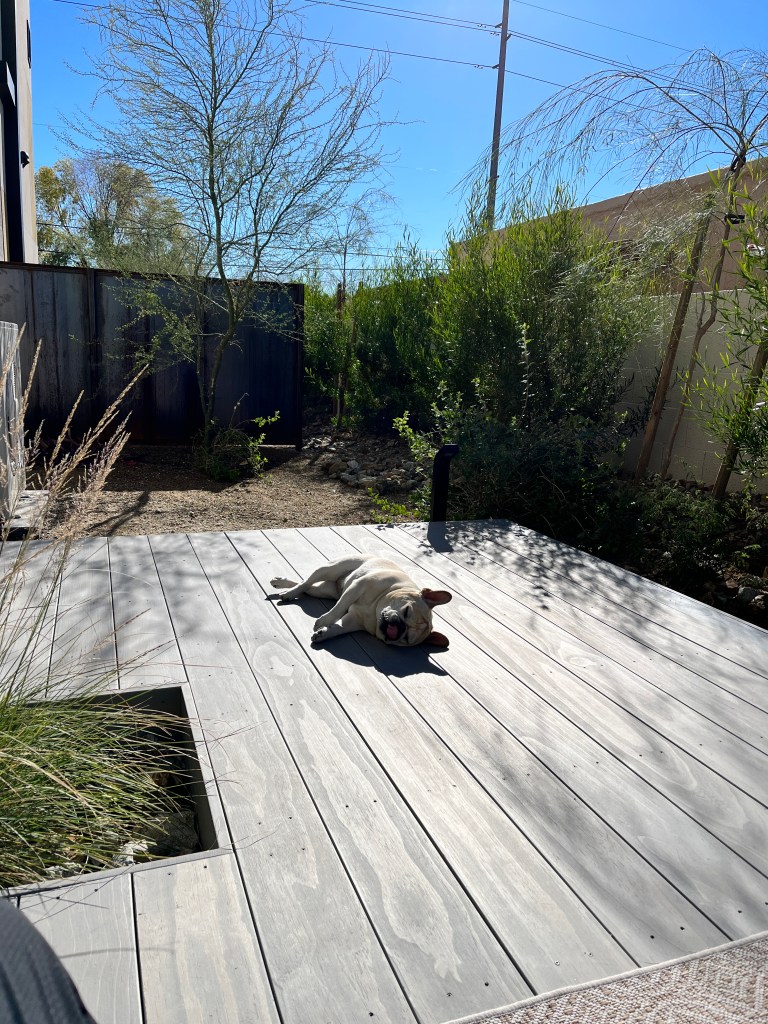
In our home, the developer thoughtfully chose to use Accoya wood in three key areas: as textured siding on the exterior walls, as smooth decking on our three patios, and as casings around our windows and doors. Each application adds a natural, modern aesthetic to the home that we absolutely love.
The textured version of Accoya on our exterior walls has a tactile, warm gray finish that adds visual interest to the house while blending beautifully with the desert surroundings. It creates a natural, earthy look that is both contemporary and timeless. The smooth version of Accoya on our decks has a similar warm gray color and feels wonderful underfoot. It’s smooth to the touch and has a natural appearance that enhances our outdoor living spaces.
The use of Accoya wood on our window and door casings adds another layer of cohesion and style to the exterior as well as the interior. The wood’s durability ensures that these high-touch areas will remain in excellent condition for years to come, even in the face of the harsh desert climate.
The Environmental Benefits of Accoya
Another reason we’re so pleased with Accoya is its sustainability. Accoya is sourced from fast-growing, sustainably managed forests, meaning it has a low environmental impact from the start. Plus, the increased durability and lifespan of Accoya wood mean it doesn’t need to be replaced as often as traditional wood, reducing waste over the long term.
Additionally, Accoya is 100% recyclable, so when it eventually reaches the end of its life—many years from now—it can be repurposed rather than sent to a landfill. This focus on sustainability aligns perfectly with the goals of our home, which was designed to be both healthy for us and kind to the environment.
Final Thoughts on Accoya Wood
Overall, Accoya wood’s stability, durability, and beauty make it a standout material for our home. I’m particularly impressed by how well it holds up in the harsh desert environment, where many other materials would struggle. The warm gray color adds a unique touch to the house, and I love how the wood feels to the touch—smooth and natural, without any synthetic coating.
While we didn’t get to personally choose Accoya, we’re incredibly thankful that our developer did. It’s a decision that we appreciate every day, as it enhances both the aesthetics and sustainability of our home. If you’re looking for a beautiful, sustainable, and long-lasting material for your home, I highly recommend considering Accoya wood.
 Healthy Home in the Desert
Leave a comment